Jacob Coyne | The Secret Life of Christians | Steve Brown, Etc.
Ministries > Steve Brown, Etc. with Steve Brown
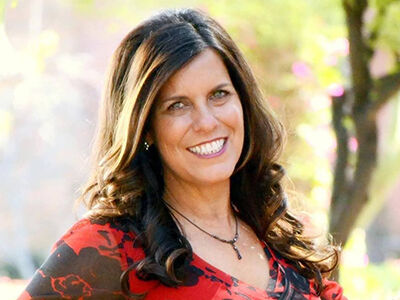
Do you often feel empty or exhausted? What if the answer isn't doing more, but drawing NEAR? This week, Steve and the gang chat with author/preacher Jacob Coyne about the 'secret life' of Christians – and why we can't afford to neglect it.
The post Jacob Coyne | The Secret Life of Christians | Steve Brown, Etc. appeared first on Key Life.
Steve Brown: Hey, you're exhausted. What if the answer isn't doing more, but drawing near? Let's talk about it with Jacob Coyne on Steve Brown, Etc. He's an old white guy, an author, broadcaster, and seminary professor who's sick of religion. And he's brought friends. Please welcome Steve Brown, Etc. Hey, we're so glad you're here. Welcome. In case you're wondering, I'm Steve, the aforementioned old white guy, and you always have a seat at our table. We just don't let you say anything. Matthew Porter is our executive producer. He's here. Matthew's family just adopted a new cat. I'm afraid to ask, but how many cats do you have?
Matthew Porter: It's five, Steve.
Steve Brown: Five cats!
Matthew Porter: I just live in a cat reserve now. That's our home. It's just cats.
Steve Brown: No, you don't, but you're moving in that direction. You know this is an addiction.
Matthew Porter: I know. We're barreling towards crazy.
Steve Brown: I know. When they get to 40, they cart you off to the psychiatric ward.
Matthew Porter: As they should.
Steve Brown: Five cats. I got one dog, and that's all I want. Plenty, just want you to know. It's a transgender dog by the name of Annie that looks like a male. I knew you were asking and wondering about that. I have photos in my wallet. I'll show you. Our producer Jeremy is in the little glass booth. Jeremy just landed a new music gig. Finally, something to get him off the couch and out of the house. I'm just saying. Somebody's got to pay for the Doritos. Actually, he's on the road most of the time, except when we threaten him with dirt that we know if he doesn't come in here and do this program. Our one-man IT department, John Myers, is in the tech bunker. Years ago, John and his wife bought a conversation chair. And since then, that conversation has run along these lines: Why in the world did we buy this chair? And Dr. George Bingham is the president of Key Life. George is no evangelist, but as our financial guy, he's saved thousands. That's so bad, Matthew. I can't believe I read it. And Kathy Wyatt is the soft feminine side of the program. Kathy forgot to mention it earlier, but August the 12th was National Elephant Day. I don't know. I don't write this, I read it.
Kathy Wyatt: That was a good one. And why would I have mentioned it?
Steve Brown: You forgot to mention it.
Kathy Wyatt: Why did I forget to mention it?
Guest (Male): George gets it. Elephant Day. Elephants never forget.
Steve Brown: I didn't get that either. Okay, I'm sorry. I'm so shaky. You've got to explain things to the old guy.
Kathy Wyatt: But how does August the 12th fit into this?
Steve Brown: I think I failed on this one. No, no, it was good. It was just subtle. No, I'm not going to say it. It's only up from here. We have a great, we have a really great guest today. His name is Jacob Coyne. He's a preacher. He's an author. He has millions of followers on social media. As I said, he's an author, and he's the founder of Stay Here, we're going to get that story in just a little bit, a national suicide prevention movement. And he's got a new book, and it's so good I can hardly stand it, and I hold it in my nicotine-stained fingers: *The Secret Life of Christians: How to Live Authentically, Especially When No One is Watching.* Jacob, thank you for taking time to be with us. Did you, well first, let's talk about Stay Here. What do you do? Just talk to people that are ready to jump and try to turn their life? And I'm close, so make this existential, okay?
Jacob Coyne: I can help you. Yeah, I started Stay Here after losing an uncle and a stepbrother to suicide, and then an overdose, and then I lost a pastor to suicide in 2019. If pastors are dying by suicide in America, something's terribly wrong. So in 2020, before the pandemic started, we started Stay Here, and it was kind of perfect timing. That's when all of the mental health epidemic really got exposed as we were locked in. Now, six years later, we see an average of seven canceled suicides per day. We have thousands of leaders on campuses across America that are training young people to spot the warning signs and save a life. It's pretty amazing. So I never thought I'd do this. I was a pastor, but I just saw the need. I saw the gap, and I wanted to fill it.
Steve Brown: That's a hard ministry. That would be, to go from the pastorate to that kind of ministry. Most other professions would be better than the pastorate, but that doesn't sound better. That sounds really, really hard. But it really makes a difference, doesn't it?
Jacob Coyne: For sure. Yeah, it's been amazing. I mean, we've worked with some of the largest churches, we've trained them, and that's been the greatest thing for me to see because when I was a pastor, we had no formal training for helping the suicidal or the depressed. We had the DEI trainings, but we never had any suicide prevention training. That's crazy to me. People go to church because they're broken. The church isn't a museum; it's a hospital for the broken. So I'm just grateful that we're able to train churches now, and I think the church should be leading the charge for mental health awareness.
Steve Brown: You mentioned a pastor who committed suicide. I spoke at a church, this has been a good many years ago, a large church where the pastor had just committed suicide. And the elder who took me from the airport said, "Don't say anything about it." And three staff members said, "Don't bring it up." And I thought in my own pastoral way, like hell, and I got into the pulpit and I said, "Everybody told me not to talk about it, but it's the elephant in the room, and we've got to talk." And I can't tell you, Jacob, how many people came up to me and said, "Thank God somebody was willing to say something." And you're saying it all over the country, and I thank God for that too. All right, to the book. What happened to you? Listen, you could have been famous and rich. You could have had a membership at the local golf club. You could have driven a Mercedes, and you threw it away. What, are you crazy? Tell us that story.
Jacob Coyne: Well, like I think Matthew said, you had five cats. I have five daughters.
Steve Brown: God bless you, sir.
Jacob Coyne: Thanks. I've got a big family and my family's just been growing and growing. But a couple years ago, I was taking off in ministry. I had millions of followers, and I was getting invited to speak. I could speak every weekend somewhere if I wanted to. So I'm speaking at a church in Seattle, Washington, and I'm in the green room. And another pastor comes in the green room just about 20 minutes before I hit the stage and start preaching. And he's like, "Jacob, you're crushing it, man. You're growing, the follower counts are getting higher and higher, you're getting invited here and there. If you don't cheat on your wife, you're going to be the next big thing. What's your honorarium for this event? How much are they paying you?" And I'm like, "Are you kidding me? What are we talking about in the green room? I'm supposed to be praying for what I'm about to preach about, and we're talking about getting bigger and better." And he said, "You're going to be the next Judah Smith if you keep going." And this is so crazy, because two weeks later, Judah Smith, who's a pastor, he was a pastor in Seattle, now he's a pastor in L.A., he's famous, he's Justin Bieber's pastor, for crying out loud. He calls me. He FaceTimes me. He and his wife are on the phone, and he's like, "Jacob, I'm so proud of you, so excited to see what God's doing in your life, but I have a warning for you." And I was like, "What's that? What do you want to tell me?" And he's like, "You're on a rocket ship, and it's impossible to build a house on a rocket ship. You've got a small family right now, you've got two or three kids, I'm sure, but I bet you'll have more kids in the next couple years. I'm telling you this. I've seen people like you, young guns, grow fast in ministry and you get elevated and people clap for you, they applaud for you, but you have no foundation. You have no root system. You're not plugged into your local church. It's impossible to build this home on a rocket ship. It's going to crumble. So you're moving at a pace that God's not moving in. You're moving at the pace of the world, and God's asking you to settle down and slow down and live a quiet life. And if you're really called by Him, He'll find you. People will find you." So you know what I did? I moved from Vancouver, Washington, where it's busy and bustling, to Appalachia. We moved to Johnson City, Tennessee, where nobody knows where that is.
Steve Brown: That's my home! I grew up in Asheville. That explains a lot about me, but not a lot about you. Guys, if you go anywhere, you're out of your mind. There has never been a book more well-timed than this one. The title is *The Secret Life of Christians: How to Live Authentically, Especially When No One is Watching.* If you're just plain tired, if you're tired of trying to get everybody to notice, if you want to run, don't go anywhere. This is going to be a life-changing hour. Jacob, before the break, you were sharing the story about how Judah Smith called you and gave you a kind of an exhortation and maybe saved you from some heartache. I'm wondering if he's just kind of protecting his part of the mountain at the top of the mountain. He's like, "Listen, let me just... thanks." But I'm probably wrong on that. That's me. So the title is *The Secret Life of Christians.* What does secret life mean in this context?
Jacob Coyne: The secret life, everybody has a secret life. It's the things you do when nobody's watching. So we all have a private life; we have a secret life. So I named it that because every Christian might have a double life. I think most of us do. We're most of us are performative people, and Jesus warns us of that. Those are hypocrites, right? Those are people who wear the mask. A hypocrite isn't somebody who sins. I mean, all of us sin, right? But a hypocrite is someone who sins and fakes it. They don't want anybody to know about it. And we have a false self, most of us do. When we show up to church on Sunday, we have a different smile, different tone of voice, but then in the car or on the way home with our kids, we might be a completely different person. So the goal of the book is to eliminate the false self. It's to eliminate the masked, hypocritical self, the performative Christian. And we've been taught to be that way. I grew up learning to be a performative Christian, full of religion. And what's crazy about this, the secret life, is Jesus had a secret life, but it was pure, right? And the Bible shows us that 18 years of Jesus' life are hidden from us. So Jesus didn't only have a secret life, he had a hidden life that nobody even knows about. From ages 12 to 30, there is no written documentation of what Jesus was doing. We can guess. We can guess that he was doing carpentry work because the Bible says, "Wasn't he the carpenter's son?" He grew up in Joseph's home. He's obviously the Son of God, but he's doing carpentry work with Joseph. So we know that from ages 12 to 30, Jesus is building tables and doors, and he's doing nothing quite remarkable. He's not doing miracles. He's not healing the sick, casting out demons. He's not preaching in synagogues. He is spending quality time with his family. He's going to the temple to spend time with God. He might be going to the wilderness to go pray. He's preparing. And I think it's incredible that Jesus spent 30 years of his life preparing for three years, but most of us, we want to spend three years preparing for the next 30. We have it all mixed up. I love that about Jesus, that he is fully God and he's fully man. He lived a human, ordinary life, building things with his own hands. I mean, he probably got splinters as he's working with wood. I just love that about him. And I think that in Christianity today, many of us despise those early years. We despise the Nazareth years where nothing's special, nothing spectacular. We hate the ordinary. We want everything to be glamorous and loud and proud. But Jesus did both. He healed the sick, and he also had meals in people's homes. And I think that that's the Christian life. The Christian life is ordinary and extraordinary at the same time. So for the secret life of Christians, I wrote this book because I needed to go back to that. I was so busy, and I was running on fumes in ministry. It was easy for me to be a professional Christian. I knew how to say all the right things on stages and post the right things to grow my following. And I found it so disturbing that I would spend time with God just for content. I would go and pray just for a sermon. I would go and pray and be alone with God just to get the next one-liner or the next revelation to speak about or write about. And that's not what God is like. He's not a content machine. He is God. He's a person. And I wanted to go back to the early life where I gave my life to Jesus at age 16, and all I did was pray just to be with God. I showed up at a men's Bible study with my dad, and my dad the week prior before that, he gave his life to Jesus. He was a mess. He was a terrible person, to be honest. And he goes to this Bible study to change his life, and he comes back a completely different person. He met Jesus there. So I said, "Dad, take me to this place with all these old men. What's happening there?" And he said, "I got set free. I met Jesus. I was filled with the Holy Spirit." So he takes me there, and the same thing happens to me. And in those early years before I became a "professional Christian," quote-unquote, or before I had a job as a pastor, I would spend time with God just because I loved him, just because I wanted to know him, just because I wanted to be with him. And I lost that over the years, to be honest. And I think that that's sad. Many people do that. Jesus said that there are two, there are two different things that he can say to you at the end of your life. It's either, "Well done, my good and faithful servant," or, "Depart from me, I never knew you." And what's scary about the "Depart from me, I never knew you" is the people who he says that to, they said, "Jesus, didn't we prophesy in your name? Didn't we do mighty works in your name? Didn't we heal the sick in your name?" And they even call Jesus "Lord," but Jesus says, "I don't even know who you are. I never knew you." But the other version, "Well done, my good and faithful servant," that's what I want to be. And being a good servant just means obeying Jesus one day at a time. It means knowing Jesus one day at a time. It doesn't have to be on stages, healing the sick, casting out demons, doing mighty works for God. Yeah, you can do that in ministry, but faithful servants are mothers, faithful servants are firemen, faithful servants are doctors, faithful servants are my Grandma Linda who's taken care of her disabled son her entire life. Those are faithful servants of Jesus who love him and love their neighbor well. So I had to go back to that secret life, and I have over the last couple of years. And I finally have a relationship with Jesus where I don't feel like I have to post everything about it. I think it's just so wild that if you go on social media, you'll see videos like that where people are literally filming themselves in their prayer room. They're in their closet and they're like tears in their eyes, "God's touching me right now, this is amazing! He's so here!" What are we doing? Why are we posting videos of ourselves giving money to the poor, praying alone? This stuff is private. Jesus says that those are things that you should do and no one else should know about. So that's the secret life. We've got to be willing to do things that no one knows about. You've got to be willing to live a life that no one claps for because we live for an audience of one. And if that's not enough, you've got to go back to the basics. His opinion is the only opinion that truly matters.
Steve Brown: Oh man, that is such good stuff. Somebody's listening now to this broadcast and they're saying, "You know, I tried this season of prayer stuff, and I said the Lord's Prayer eight times, prayed for everybody I knew and the three missionaries who were friends, and I'm sitting there and thinking, 'What do I do now?'" So I went out and got a beer. And I want you to talk to that person on the other side of the break. Guys, this is so good I can hardly stand it. Jacob, before the break, I was talking about a friend of mine, and you know about the friend of mine, it's really me. I mean, after I've prayed the Lord's Prayer eight times, prayed for every missionary, all three of them that I know, and for my family members, and I've taken I'm going to do a season of prayer and that took 12 minutes. What do I do? I mean, there's got to be more than that. What do I do then?
Jacob Coyne: Yeah, that's my struggle. I mean, I still struggle with that. So I had to go back. I wanted to go forward in my prayer life, and I felt so stuck. I was always taught, "Just feel it." Because I grew up very charismatic, Pentecostal in my faith upbringing. So it's like, "Just feel your way in prayer, do whatever you feel like and whatever you want to say to God, He's your father, He loves you." But man, when you're busy and your brain is mush after working your job, I'm taking care of all my kids, making dinner for them when I get home from work, I'm so tired. It's hard to think of even five minutes of what to pray for. So I had to go back to the early church fathers. What did they do? How did they spend time with God? Were there ways to pray that worked for them? Were there certain prayers that they prayed? So I started to develop a little mix of both. So for me, I pray the Lord's Prayer too, I'm with you, Steve. But there's other prayers that I took on praying every day. One of those is the Jesus Prayer. And it's funny because it's such a short prayer, but it just lives in my heart. I pray it constantly: "Jesus Christ, Son of God, have mercy on me, a sinner." And monks breathe with it. Exactly, you breathe in, you breathe out, you receive his forgiveness, you receive his mercy. And I love that prayer so much because it keeps me grounded in the gospel. It reminds me that God is always merciful, no matter how much I sin, no matter how many mistakes I may have made that day, His mercy triumphs over judgment. There's always more forgiveness. He's a better forgiver than I am a sinner, right? So that prayer has been a huge prayer in my toolbelt. And then also the Daily Examen. St. Ignatius of Loyola, he practiced the Daily Examen. And that's after, I mean, he was... I relate to him a lot. I mean, he wanted to be an amazing soldier and do great things and be well known, and he was into romance books and stories of warriors fighting dragons. And then a cannonball blew his leg. So he couldn't do any of that stuff. And his sister gave him all these books to read as he's recovering, and they weren't any books that he wanted to read. They weren't the romance books or the dragon slayers or anything like that. It wasn't the Odyssey. They were religious books, books on prayer, books on God. And he began to read these books and he had nothing else to do. And it helped him to develop a love for Jesus, and then he developed this the Daily Examen, where at the end of your day, you just ask the Lord: "Where did I see You, and where did I miss You today? Where were You in my life today? What were You doing? And if I read the Bible today, did I even live that out?" So you kind of examine your own heart, you examine your own soul. And it takes time. That might take 15 minutes of your time. And I love that you it takes it takes a bit for you to slow down. And it's so hard for us to slow down. We want to scroll, we want to watch something on Netflix, but to examine your day, you've got to quiet yourself, slow down, and really think about the times where God was speaking, where He was doing something in your day. So I've been practicing that. And then honestly, I just have to have scheduled time of prayer. My wife and we have scheduled times in the week where we pray. And one of those is praying for our five daughters. We want all of them to love God; we want all of them to live incredible lives. And we have a whole list for them. So for us, we have a prayer list where we go through the entire thing on Monday nights. But then after that, we're done with the prayer list, we want to keep praying because God's in the room and we've developed these early church practices in prayer that have worked for us. And I think it's so funny that I'm at this place now in my life, I'm in my 30s, and I'm using these old prayers when in my 20s, I used to think those were stupid. I used to think those were religion and rote and they were full of repetition, they're boring. Why don't we just turn on loud worship music and dance around the room for God? But now these prayers have changed my life, but particularly the Jesus Prayer. I feel like I'm a monk at heart.
Steve Brown: You were talking before the break about using some of the patterns of the desert fathers for prayer and some of the early church. And throughout your book, one of the things that stood out to me was how you reference people throughout church history: the desert fathers, Brother Lawrence, Hudson Taylor, C.S. Lewis, on and on. And you know, that really struck me that it's not only a good source of models for how to pray, but that connection that people can feel, especially as they become Christians and understanding that it's not just you and Jesus walking off in the sunset; it's you're connected with thousands of years of family. Talk a little bit about that and why was that important in the book.
Jacob Coyne: That was so important to me because like I said in my kind of charismatic Pentecostal upbringing, I was taught that the church fathers were Billy Graham, Martin Luther, C.S. Lewis, maybe even Martin Luther King Jr. So I'm like, wait, what happened before all that? These people are amazing, and some of these faith healers, they're great people, and I love them and I admire them. I wrote about one of them in the book, Smith Wigglesworth. But you know, that's in the 1800s, early 1900s. What's before all that? What's before Martin Luther? Am I not connected because I'm a Protestant? So am I not connected to any church history because it's Catholic, quote-unquote? So I wanted to dive back and and figure out what I'm missing because I felt disconnected from the early church. I felt disconnected from the apostles. How did we just show up here? So I started reading early church fathers, their writings, their epistles, their letters, and I was blown away by the way they lived, by the way they wrote. I got to know St. Augustine and St. Francis of Assisi, I got to know St. Ignatius and Polycarp. And these men are mountainous men, just incredible men. Or Thomas Aquinas, my gosh. Like I don't have enough time to read all of his books, all of his writing. But the things that these men have written down have changed my life. And this started for me because I went to Israel. I got a free trip to Israel. This is the perks, guys, of being a mid-level famous Christian, okay? You get free trips to Israel. I get invited to Israel every single year. So this time when I got invited, I said, "Hey, that's amazing that you want to take me on a free trip, but my wife also needs help. I mean, I've got all these kids at home, so can you pay for the babysitter to have family to come over?" They paid for that too. So I went for ten days to Israel on this tour. And on one of the days, we went to the Garden Tomb and we went to the Church of the Holy Sepulchre, all on the same day. The Garden Tomb was discovered in the 1800s, and it was discovered by a man from Great Britain who's a Protestant, and he bought the land and he said, "This really looks like a place where Jesus was likely raised from the dead." It's beautiful. I mean, you could see on this hill, it's right outside the walls of Jerusalem. You could see a hill; looks like it may be Calvary, and then there's a tomb right next to it, might be the place. So hence the Garden Tomb. Then we go to the Church of the Holy Sepulchre. And before I talk about the Church of the Holy Sepulchre, the Garden Tomb is just beautiful. I mean, it looked like a Disneyland exhibit. It was just beauty everywhere and it was a cool tour. The tour guide takes us through, you get a few seconds to walk inside the tomb and take your picture, everyone has their phones out. It was fun. So then we go to the Church of the Holy Sepulchre, and that was a different story with my group. We walk in, and most of my group wanted to leave immediately. They're like, "What is this place? The smells and the bells are here, the weird people are here." The Church of the Holy Sepulchre is filled with Eastern Orthodox, Greek Orthodox Christians, Roman Catholics, Ethiopian Christians. I mean, it feels ancient in there. And you see all these Christians with veils over their faces, kneeling down and praying. It's dark in there. It feels candle-lit. And most of my tour group wanted to leave and go explore somewhere else or get a tattoo at the Razzouk tattoo next door. So I said, "I want to stay." So I left my group and I'm all alone at the Church of the Holy Sepulchre. And for those listening, this is the Church of the Holy Sepulchre is the other likely place where Jesus was crucified and raised from the dead, all in that vicinity. It's been around since the 300s AD where it's been established as a church or the site where Jesus was crucified and raised from the dead. So as I'm walking through, I just, my heart's pounding. I'm watching all these people encounter the Lord, pray, kneel down. And I felt completely disconnected from these Christians. And for me at that point, I believe that these are my brothers in Christ, these Greek Orthodox, Eastern Orthodox Christians and Catholics. They're my brothers, but I felt completely disconnected from them in the way they practice their faith in Jesus. So that led me to wanting to go home and search the desert fathers, the church fathers, and see what they actually believed in, what they wrote, the way they prayed. And I felt completely elementary as a Christian. It's crazy that I went to ministry schools, I was a youth pastor, I was a Bible teacher, I was the pastor of an entire school and the staff. I mean, I'm 25 years old pastoring 50-year-old men. What in the world? And at that point, I had no idea what the early church really looked like. And I had to go back. And man, it's changed my life. I feel connected from the resurrection to now at this point. And it's a great feeling to know that we are surrounded, as the book of Hebrews says, by a great cloud of witnesses. And there's so many men in the faith that I'm inspired by, so many women in the faith that I'm inspired by that keep me going. And it feels amazing to know that there's people who struggled, too, like St. Augustine. Man, he struggled. He's like most of us. He wanted to live a worldly life, and then finally he's just he's banging on the ground, "I keep telling myself tomorrow, tomorrow, tomorrow. Why not today?" And then he gives his life to Jesus. I think so many of us relate to that.
Steve Brown: Oh, listen, we're out of time. Spit! We had so much. Listen, this will give you a taste of this book. You ought to get it. It's titled *The Secret Life of Christians: How to Live Authentically, Especially When No One is Watching.* This is the kind of book you want to go through with your husband or your wife or maybe some other Christian friends to begin to practice together a secret, a secret life. Jacob, we rise up and call you blessed. Thank you for spending this time with us.
Jacob Coyne: Thanks for having me.
Steve Brown: Hey, we'll tell you about next week.
Guest (Male): We have no idea.
Steve Brown: Thanks a lot. I hate it when you do that. No idea whatsoever.
Guest (Male): Well, you know, when we get to this point, which is very, very occasional because the throngs are beating down our door to be on our program, but we do hit a roadblock every once in a while. And so Matthew has to do his magic. There he goes.
Steve Brown: All right, Matthew's going to do his magic next week, and you don't want to miss it. Good thing we're in the magic business. That's kind of scary. Hey, join us same time, same place. Don't do anything we wouldn't, it gives you a wide border. Just barely got that in! Oh!
Related Episodes
Toni Kim | Shame Redeemed | Steve Brown, Etc.
Sunday, September 13
Drew Hensley | Still Becoming | Steve Brown, Etc. (Re-air)
Sunday, September 6
Angelo & Barbara Juliani | Mark | Steve Brown, Etc.
Sunday, August 23
About Steve Brown, Etc.
A weekly talk show featuring Steve and “the rest.”Key Life exists to communicate that the deepest message of the ministry of Jesus and the Bible is the radical grace of God to sinners and sufferers.
Because life is hard for everyone, grace is for all of us. And grace means that because of what Jesus has done, when you run to him, God’s not mad at you.
All of the radio shows, sermons, books, and videos we produce work together toward one mission: to get you and those you love Home with radical freedom, infectious joy and surprising faithfulness to Christ as your crowning achievement.
Learn more: http://www.keylife.org
About Steve Brown
He’s not your mother and he’s not your guru. He’s Steve Brown - a speaker, author, former pastor and seminary professor, and founder of Key Life Network, Inc.At Key Life, Steve serves as Bible teacher on the radio program Key Life and the host of the talk show Steve Brown, Etc. Prior to Key Life, Steve served as a pastor for more than thirty years and continues speaking extensively.
Steve has also authored numerous books, including How to Talk So People Will Listen, Three Free Sins, Hidden Agendas and his latest release, Talk the Walk: How to Be Right Without Being Insufferable (now available as an audiobook).
Contact Steve Brown, Etc. with Steve Brown
Key Life Network
P.O. Box 5000
Maitland, FL 32794
In Canada, send requests to:
Key Life Canada
P.O. Box 28060
Waterloo, Ontario N2L 6J8
1-800-KEY-LIFE (1-800-539-5433)