U.S. EPA supports Maricopa County rule to reduce emissions
Regional News

Audio By Carbonatix
11:10 AM on Tuesday, October 20
(The Center Square) - The U.S. Environmental Protection Agency is supporting a Maricopa County plan to encourage businesses to replace old, high-polluting non-road vehicles with cleaner technologies.
The EPA says there's no cost to taxpayers.
Earlier in October, the EPA proposed approval for the Arizona county’s Rule 204, which was developed by the Maricopa County Air Quality Department, based in Phoenix.
Rule 204 would allow businesses that upgrade to cleaner technology to potentially generate emission-reduction credits. Potential credit-generating sources include railroad locomotives and construction equipment.
According to EPA spokesperson Carolyn Holran, the rule requires no taxpayer-funded initiatives. “The rule is designed such that the facilities needing air emission reductions to offset their air emissions increases would bear the costs of implementing the rule."
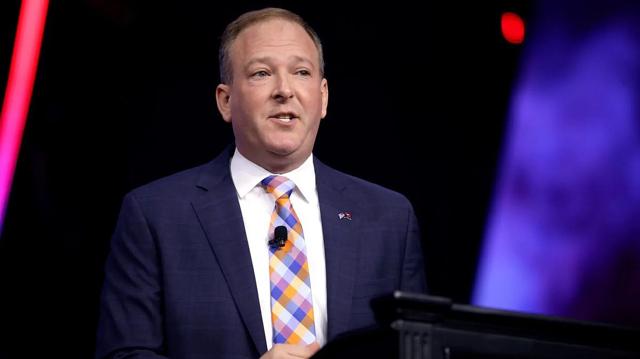
EPA Administrator Lee Zeldin said the Trump administration’s EPA “is proud to work once again with Maricopa County to ensure economic growth while also protecting clean air.”
“We can and will grow the American economy while fulfilling our core mission of protecting human health and the environment,” he added.
Board of Supervisors Chair Kate Brophy McGee said implementing Rule 204 “will improve the quality of the air we breathe while enabling key industries to continue investing in our community.”

Maricopa County Board Chair Kate Brophy McGee
Kate Brophy McGee chairs the Maricopa County Board of Supervisors in Arizona. Photo: Courtesy of Ben Flores / Maricopa County / Used with Permission
Ari Halpert, the communications department officer with the Maricopa County Air Quality Department, said Rule 204 “encourages reductions in nitrogen oxides (NOx) and volatile organic compounds (VOCs), two pollutants that contribute to ground-level ozone formation.”
“By promoting cleaner equipment, the rule supports improved air quality and Maricopa County's efforts to meet federal ozone standards,” he told The Center Square by email.
Maricopa County is currently ranked as a moderate nonattainment area for ground-level ozone, according to the county. The EPA says nonattainment areas fail to meet federal air quality metrics.
Holran said for this type of ranking, the Clean Air Act “requires ozone emission increases to be offset by air emissions reductions from NOx or VOCs, which are ozone precursors, at a ratio of 1.15 to 1.”
As an example, the EPA spokesperson told The Center Square by email that “if a facility increases emissions by 100 tons per year of NOx, they would need to offset their emissions by 115 tons per year of NOx.”
Under the Clean Air Act, new or existing industrial facilities in the Phoenix-Mesa nonattainment area that emit or have the “potential to emit air emissions above certain thresholds” must “offset the increase in emissions with air emissions reductions from other sources within the nonattainment area,” Holran explained.
She said if Rule 204 is “finalized as proposed,” it would “provide additional mechanisms for generating air emissions reductions in nonattainment areas to help ensure economic growth can continue while also making progress towards cleaner air.”
Emission reduction credits “will enable key industries to meet the manufacturing and energy needs of the area while following all [Clean Air Act] requirements for a ‘Moderate’ nonattainment area for the 2015 Ozone [National Ambient Air Quality Standards],” Holran noted.
Arizona Chamber of Commerce President and CEO Danny Seiden said Arizona businesses have tried for over 10 years to “expand the tools available to reduce emissions while giving companies a workable path to invest, expand and create jobs.”
“Rule 204 does exactly that: When businesses voluntarily replace older equipment with cleaner technology and achieve real, measurable emissions reductions, those reductions can help make continued economic growth possible,” Seiden explained.
To keep track of emission reductions, Halpert noted the air quality department “would calculate emission reductions by comparing emissions from existing equipment with those from cleaner replacements or retrofits.”
“The department would review supporting documentation, certify eligible reductions, and monitor compliance through recordkeeping, reporting, and inspections to ensure reductions are measurable, permanent, and enforceable,” he added.
The EPA’s action marks the second time it has acted with Maricopa County this year.
In April, the federal agency announced its proposed approval of Rule 205, which gives emission-reduction credits to fleet owners who retrofit or replace high-emitting on-road vehicles.