Op-Ed: Trump's border wall is working, but there’s still a gaping hole
Regional News

Audio By Carbonatix
6:15 AM on Tuesday, August 18
Americans hear endless talk about the southern border – walls, surges, gotaways – but few know about one of the border’s biggest vulnerabilities: the Tohono O’odham Nation’s reservation.
Stretching across roughly 2.8 million acres of Sonoran Desert in southern Arizona, this sovereign tribal land shares about 62 miles of the U.S.-Mexico border. That stretch is no minor footnote. It has long served as a preferred corridor for people illegally entering America and Mexican cartels precisely because its legal status as sovereign tribal territory limits the full power of federal enforcement.
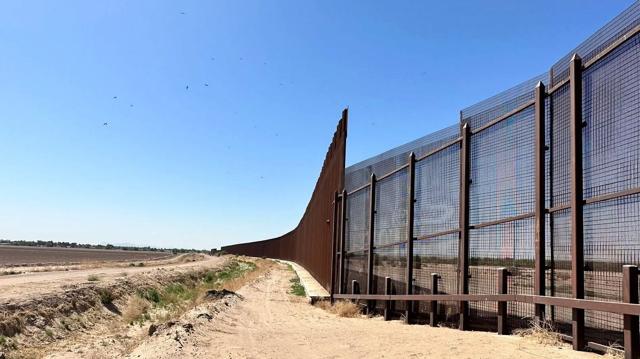
The Trump administration is moving aggressively to construct double-layer barriers, roads, lighting and related infrastructure across large sections of the southern border. Those physical deterrents work where they exist. They do not, however, close the gap on Tohono O’odham land. Tribal leaders have repeatedly refused consent for a continuous physical wall, sued to block construction, and posted “no trespassing” signs aimed at contractors. The result is a weak point for exploitation that is common knowledge to cartels and smugglers.
Federal agents operate on the reservation under agreements for checkpoints, forward operating bases, surveillance towers and vehicle barriers. Vehicle barriers are designed to stop cars, however, not people on foot. Integrated towers and sensors help interdict some traffic, but they do not create the physical obstacle that has proven effective elsewhere. Tribal refusal of a permanent barrier leaves open desert terrain that cartels treat as a highway.
When enforcement tightened in other sectors in the 1990s and 2000s, traffic shifted onto the reservation. By the mid-2000s, tribal police and federal agents were dealing with daily crossings measured in the hundreds to over a thousand. Drug seizures ran into tens of thousands of pounds of marijuana annually, alongside cocaine and later methamphetamine and fentanyl. Cartels established scouts on mountain tops inside the reservation, using binoculars and radios to guide loads around patrols.
In one major 2011 operation, authorities dismantled a Sinaloa Cartel cell that had funneled multi-ton marijuana shipments and people through remote areas near the San Miguel Gate – a tribal crossing point – while moving cash and weapons south. Nearly half the defendants in that case were tribal members.
Poverty on the reservation has incentivized tribal members to become participants in the trade. Federal investigators have repeatedly documented cases in which Tohono O’odham residents acted as scouts, drivers or stash-house operators for cartel organizations. Court records show dozens of tribal members prosecuted for marijuana and human smuggling. Cartels have staged loads on the Mexican side near Tohono O’odham communities, then moved them north across the lightly controlled line.
Cartels also use migrant surges as diversions so backpackers carrying methamphetamine, heroin or fentanyl can slip through elsewhere. Migrant remains recovered on the reservation number in the hundreds over two decades, acceptable collateral damage to the cartels in the lucrative business of ferrying drugs and human cargo across the border.
The federal government cannot simply seize the land or ignore tribal consent the way it can on ordinary federal or private property. The 1907 Roosevelt Reservation – a narrow 60-foot strip along the border – has been the subject of recent litigation, but the broader reservation remains contested ground. A federal judge recently declined to block wall construction in the strip, but the tribe’s opposition and legal challenges continue to slow and limit the project.
Meanwhile, the double wall rising in other Arizona and southwestern sectors will simply displace pressure onto this softer target. Every mile without a physical barrier is a comparative advantage for cartels.
The Trump administration’s efforts to tighten border security have been a game changer in dramatically reducing the number of illegal border crossings from the invasion-like levels under Joe Biden. However, gaps like the Tohono O’odham Reservation remain problematic. Respect for tribal sovereignty should not require abandoning national sovereignty over the international boundary. Until that gap is closed – by a wall, by enhanced federal authority or by genuine full coordination – the Tohono O’odham Reservation will remain what it has long been: a little-known but critical hole in America’s border.