


WASHINGTON, Aug 17 (Reuters) - The U.S. Immigration and Customs Enforcement agency has put forward an insurance plan that could protect local police officers who make immigration arrests from potential financial consequences if they are accused of misconduct while on duty.
• ICE, which has been the face of President Donald Trump's immigration crackdown, proposed to help pay for liability insurance for local officers trained and deputized to enforce federal immigration laws, a proposal document said. It was first reported by the Associated Press.
• According to the plan laid out in the document, officers could obtain professional liability insurance covering up to $500,000, which can cover legal fees, settlements and judgments, depending on the policy's terms.
• Officers would be reimbursed up to $250 annually for the cost of the insurance, according to the plan.
• The exact timeline for when this program will be launched was not clear.
• Cato Institute Director of Immigration Studies David Bier, who has been critical of ICE's actions, voiced concern about the plan.
• "The concern here is that ICE is going above and beyond to guarantee law enforcement does not have even the slightest risk of liability for violating Americans' rights while helping ICE arrest people," Bier said in a statement on X.
• The document said ICE was considering hiring a contractor to help in outreach, training and communications support for its specific partnerships with local departments under immigration law.
• The contractor would hire an insurance vendor and process reimbursements.
• ICE asked for industry feedback by later this week.
• Trump says his immigration crackdown and deportation drive is aimed at improving domestic security.
• Rights groups say the ?crackdown has violated free speech and due process rights and has created an unsafe environment, particularly for ethnic minorities, ?who have raised concerns about racial profiling.
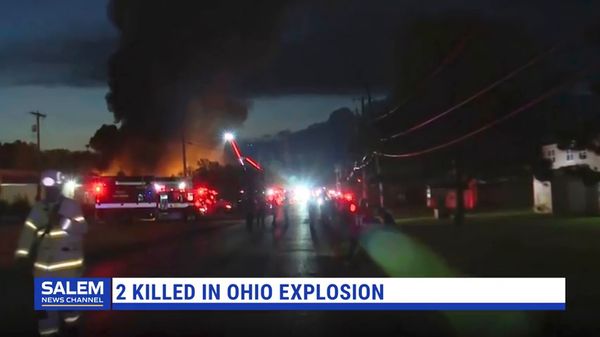
TOLEDO, Ohio (AP) — Explosions rocked an Ohio industrial recycling business early Tuesday, killing two workers and sparking a large fire, officials said.
Flames and dark smoke poured from Brent Industries in Toledo as fire engines surrounded the building, TV news video showed.
Crews later discovered the bodies of two employees, a man and a woman, inside the smoldering building, said Toledo Fire Chief Allison Armstrong. Two or three other employees had minor injuries, she said.
Two explosions occurred shortly before 5 a.m., during a shift change, Armstrong said. Crews had to deal with hazardous materials, runoff and the threat of more explosions while first searching for victims and accounting for the other employees, she said.
Environmental officials said monitors showed that there was no hazardous threat in the air.
Demetrius Langston said he felt the explosion half a mile (0.8 kilometers) away. He ran outside with his phone and captured video of a huge plume of smoke rising into the dark sky.
“The shock waves came down the block,” he said. “Then we all heard it again. Boom! You could feel it.”
Armstrong said the fire was still burning Tuesday afternoon. She also said there were no preliminary indications of what caused the explosions.
Aerial images showed that nearly all of the building’s roof was gone and that the blast blew out its walls.
The federal Occupational Safety and Health Administration said it was investigating. The agency has six months to conduct its investigation and it won't release any more information until that's completed, officials said.
Authorities encouraged people near the site who could see or smell smoke to keep windows and doors closed and avoid the area.
Phone and email messages were left for Brent Industries.
The company, based in Brent, Alabama, offers textile reconditioning and industrial recycling services aimed at reducing waste and saving money, according to its website. It was founded in Alabama in 1977 and has operations in Brent and Toledo.
The company’s Alabama location also had an explosion and fire in 2015 that killed one person.
After that deadly explosion, OSHA determined that flammable vapor from mineral spirits, a petroleum solvent used for cleaning and other purposes, ignited in an industrial washing machine. The company was cited for a half-dozen violations and fined $27,000, according to OSHA records.
Fire officials say tanks containing mineral spirits were at the Toledo plant. The company says on its website that it uses mineral spirits in the cleaning process for work gloves, wiping clothes and other textiles that contain hazardous substances.
In 2004, OSHA cited Brent Industries for two serious violations at its Toledo plant, including failing to protect workers from death or serious harm when they were exposed to a 207-degree Fahrenheit (97 Celsius) steam release from a washing machine, OSHA records show.
STATE COLLEGE, Pa. (AP) — Penn State fraternity pledges were made to cut and package cocaine for a drug ring that was run out of two off-campus frat houses, authorities said.
The illicit initiation was revealed Monday as Pennsylvania Attorney General Dave Sunday charged 14 people — including 13 current or former Penn State students — in connection with the alleged drug ring.
The man accused of leading the operation, 24-year-old Agostino Abbatiello, surrendered on Tuesday after failing to appear for a scheduled arraignment on Monday on charges including possession with intent to deliver and conspiracy. He was ordered jailed without bail.
A message seeking comment was left for Abbatiello’s lawyer.
According to court documents, the drug ring operated in 2023 and 2024, fueled by bulk quantities of cocaine that two of the charged men obtained from contacts in Philadelphia and New York.
They cut and bagged the drugs mainly at the Sigma Chi and Delta Upsilon fraternity houses, using frat brothers and pledges as labor, then distributed it through Penn State students, court documents said.
One of the men said a co-defendant was the “largest distributor of cocaine” at Penn State and would “boast about how much money he was making from selling cocaine.” At least four of the defendants are current students, Sunday’s office said.
“This is very serious criminal conduct. There was nothing junior or childlike about this type of conduct,” Sunday said at a news conference on Monday. “This was an upper-level trafficking organization for this region in Pennsylvania.”
Four people are charged with conspiracy, dealing in proceeds of unlawful activity, felony corrupt organizations and other offenses. Another defendant is charged with felony conspiracy and criminal use of a communication facility.
Eight defendants are charged with misdemeanor drug possession.
Paul Robinson, the father of a student who was accused with Abbatiello of being one of the ring's two main suppliers, is charged with felony tampering, hindering apprehension and obstructing the investigation. Authorities say he took steps to conceal evidence, including a safe containing drugs and cash.
Court documents did not list a lawyer who could speak on Robinson’s behalf.
Penn State said it placed Delta Upsilon on interim suspension, noting Sigma Chi is not recognized by the university and is not subject to its oversight.
Delta Upsilon Executive Director Justin Kirk said anyone involved in the drug ring who had ties to Delta Upsilon was expelled or suspended from the fraternity if they did not resign.
Sigma Chi’s executive director, Michael Church, said the three Sigma Chi members who were charged have been suspended pending the outcome of the judicial process. He said the fraternity has suspended all operations at its Penn State chapter on an interim basis “while we determine whether these allegations reflect individual conduct or organized chapter activity.”
“This conduct is an egregious violation of our values and has no place in our fraternity, community, or society," Church said, adding that any members involved “will be held fully accountable to the extent available to our fraternity.”
HONOLULU (AP) — Thousands remain without power after Tropical Storm Lala hit Hawaii, uprooting trees and causing flash floods from Honolulu to the Big Island. On Monday, officials announced one fatality linked to the storm. The storm weakened from a hurricane on Sunday but left a muddy mess as it passed the main islands. Cleanup efforts are underway, with schools and offices closed. Hawaiian Electric reported more than 100,000 customers without power. The Big Island's power system suffered extensive damage. Federal officials have pledged recovery help, and cleanup efforts are in full swing.
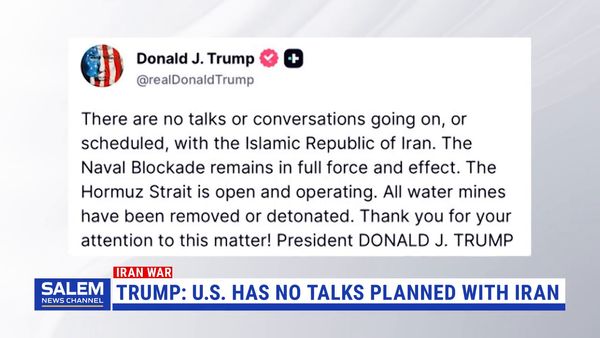
WASHINGTON, Aug 18 (Reuters) - President Donald Trump said on Tuesday that talks between the U.S. and Iran were neither taking place nor scheduled but the Strait of Hormuz was open, while Iran said the shipping route would remain closed until the U.S. fulfilled the terms of an interim deal.
"There are no talks or conversations going on, or scheduled, with the Islamic Republic of Iran. The Naval Blockade remains in full force and effect. The Hormuz Strait is open and operating. All water mines have been removed or detonated," Trump said in a post on Truth Social.
Top Iranian negotiator Mohammad Baqer Qalibaf said in comments published by state media on Tuesday that the Strait would remain shut until the U.S. met the conditions of an interim deal signed with Iran in June.
These conditions include the U.S. lifting its blockade of Iranian ports, lifting oil sanctions, releasing Tehran's frozen assets, and ending threats and military operations on all fronts, Qalibaf told parliament.
On Monday, Jared Kushner, Trump's son-in-law and special envoy, was optimistic about talks that he said were still underway.
"I can't go into the details of it, but I will say that the conversations between the U.S. government and different areas of the Iranian government at all areas is probably more robust than it's maybe ever been," Kushner told Fox News.
Outward progress towards peace talks and a resumption of oil tanker traffic through the strategic Strait of Hormuz has ground to a halt, threatening to extend the conflict that the U.S. and Israel launched with attacks on Iran on February 28.
A senior Iranian official told Reuters on Monday that Iran will shift to a "fully offensive" military posture because efforts to negotiate a permanent end to the war with the U.S. have stalled.
Asked by reporters on Monday if the U.S. was seeking to extend June's interim agreement, Trump said no.
Races to Watch in Today’s Primaries:
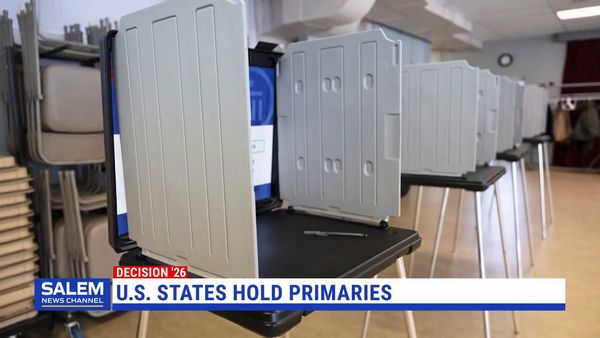
Voters in several states are heading to the polls Tuesday for primary elections that could offer an early look at the political battles shaping the 2026 midterms.
The biggest contests are in Florida, Alaska and Wyoming, with congressional control and several high-profile political careers on the line.
FLORIDA GOVERNOR
One of the biggest races to watch is the Republican primary for Florida governor.
Congressman Byron Donalds, backed by President Donald Trump, is the frontrunner in the race to replace term-limited Governor Ron DeSantis.
Donalds is seeking to become Florida’s first Black governor.
On the Democratic side, former Republican Congressman David Jolly is leading the field. Jolly switched parties in 2018 and is now trying to give Democrats a path to win the governor’s mansion after decades of Republican control.
FLORIDA SENATE
The Republican primary for U.S. Senate is another race to watch.
Senator Ashley Moody, who was appointed to the seat after Marco Rubio became secretary of state, is favored to win the GOP nomination.
On the Democratic side, former Army officer Alex Vindman is the frontrunner.
Vindman became nationally known after testifying during President Trump’s first impeachment.
The eventual Republican and Democratic nominees will face off in November for a seat Democrats would need to flip to make major gains in the Senate.
ALASKA SENATE
Alaska's Senate primary may be the most unusual race on today's ballot.
Republican Senator Dan Sullivan is running for another term — but so is another candidate named Dan Sullivan.
The incumbent is facing former Democratic Congresswoman Mary Peltola, who is trying to return to Congress and potentially become the first Alaska Native senator.
Alaska uses a nonpartisan top-four primary, meaning the four candidates who receive the most votes advance to November.
The race could be especially important for Democrats, who are looking for opportunities to flip Republican-held Senate seats.
FLORIDA HOUSE RACES
Florida's congressional primaries are also drawing national attention because of a newly redrawn congressional map.
The Republican-controlled legislature approved a map designed to strengthen the GOP's position in the state, potentially giving Republicans several additional House seats.
One closely watched Democratic contest pits Congressman Jared Moskowitz against progressive challenger Oliver Larkin.
Another high-profile race features longtime Democratic Congresswoman Debbie Wasserman Schultz running in a dramatically redrawn district against several challengers.
The results could determine which party has the advantage in Florida's congressional delegation heading into November.
WYOMING
Wyoming also has several important Republican primaries.
With Senator Cynthia Lummis retiring, Congresswoman Harriet Hageman is the frontrunner for the Republican Senate nomination.
The state's open governor's race is also drawing attention, as Governor Mark Gordon is term-limited.
Because Wyoming is overwhelmingly Republican, winning today's GOP primaries could effectively amount to winning the November election.
CALIFORNIA SPECIAL ELECTION
And in California, voters are choosing a replacement for former Congressman Eric Swalwell's seat.
The race in the East Bay features Democratic State Senator Aisha Wahab and other candidates competing for the remaining term.
The contest has attracted national attention and significant outside spending, making it another race to watch as the 2026 midterms take shape.
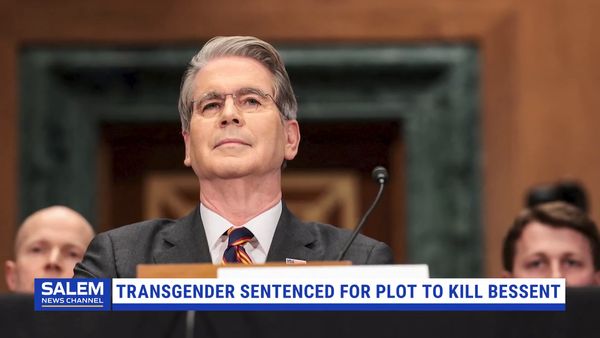
A transgender woman who admitted traveling to Washington with a knife and Molotov cocktails in a plot targeting Treasury Secretary Scott Bessent has been sentenced to more than six years in federal prison.
Riley Jane English, also identified in court records as Ryan Michael English, was sentenced Tuesday to 73 months behind bars.
Prosecutors had requested a sentence of at least 10 years.
English pleaded guilty in March to federal weapons and explosives charges after traveling from Massachusetts to the Washington area on January 27, 2025.
According to prosecutors, English was inspired by the killing of UnitedHealthcare CEO Brian Thompson and initially considered targeting a government official or burning down a Washington think tank.
English ultimately focused on Bessent, who was being confirmed as Treasury secretary that day.
The Justice Department said English had been planning the attack for some time before traveling to Washington.
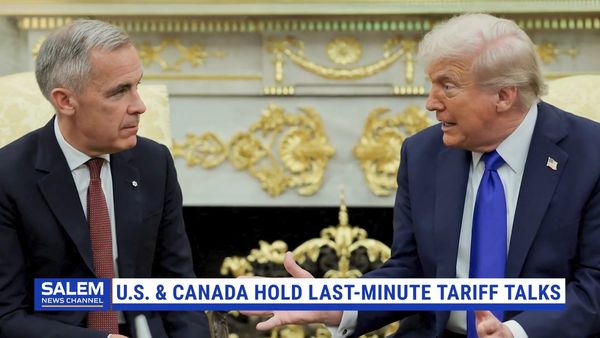
WASHINGTON (AP) — The U.S. and Canada are negotiating in an effort to reach a truce on tariffs before a 12:01 a.m. Wednesday deadline set by U.S. President Donald Trump. If no deal is reached, Trump has threatened to impose 50% tariffs on $20 billion worth of Canadian products, ranging from hockey sticks to tongue depressors. Canadian Prime Minister Mark Carney told reporters Monday that negotiations were ongoing. Carney's office said Carney and Trump spoke by phone Monday, underscoring the last-minute push to reach a deal before Wednesday’s deadline.
A bogus political poll was exposed as a social experiment, while lawmakers pursue measures intended to ensure state law remains the sole legal authority.
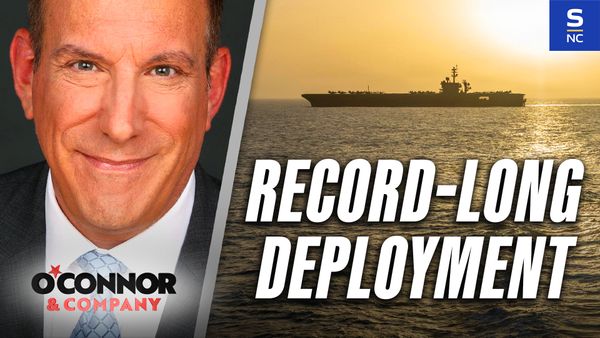
In an in-depth interview, Hung Cao, the acting Secretary of the Navy, discusses the complexities of the USS Abraham Lincoln's record-long deployment near Iran. He addresses the challenges faced by the crew, emphasizing the importance of maintaining morale and operational readiness. Despite the demanding conditions, Hung Cao highlights the crew's commitment and the strategic significance of the deployment in ensuring regional peace. He also touches on the political dynamics surrounding military funding and resource allocation, and reflects on his personal journey from a Vietnamese refugee to a key figure in U.S. naval leadership. The conversation provides a nuanced look at the balance between military duty and political pressures, as well as the broader geopolitical strategies in the region.
The Justice Department’s internal watchdog is launching a review of a controversial DEA investigative tactic that allegedly allowed fentanyl shipments to reach communities while federal agents worked to build larger cases against drug traffickers.
The review will examine Justice Department policies and wiretap investigations in which Drug Enforcement Administration agents may have learned about fentanyl deliveries in advance but chose not to intervene to avoid jeopardizing broader investigations.
The scrutiny follows an Associated Press investigation that found DEA agents repeatedly monitored but did not seize major fentanyl shipments in New Mexico between 2023 and 2025. An internal DEA report reviewed by AP detailed one case in which agents watched a delivery of 74,000 fentanyl pills at an Albuquerque mobile home park without intercepting the drugs.
The investigative strategy, sometimes referred to as allowing drugs to “walk,” has drawn criticism from current and former agents who argue it put the public at risk. DEA whistleblower David Howell has alleged federal authorities knowingly allowed dangerous drugs into New Mexico communities while pursuing higher-level traffickers.
Justice Department Inspector General Don Berthiaume says the review will examine the department’s actions over the past two years and could determine whether similar tactics were used in other cities.
The review comes as New Mexico authorities conduct a separate criminal investigation into whether DEA agents violated state law by allowing fentanyl shipments to reach the streets.
DEA Administrator Terry Cole previously requested an outside review following the allegations, saying the inquiry should not be interpreted as a lack of confidence in DEA personnel but could identify areas where the agency’s practices need improvement.
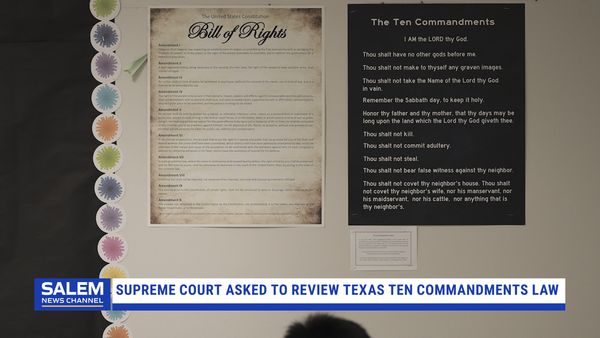
Civil rights advocates are asking the U.S. Supreme Court to review a Texas law requiring public schools to display the Ten Commandments, setting up a potential major test over religious expression in public classrooms.
More than two dozen Texas families, represented by the American Civil Liberties Union and other groups, filed the petition Monday. They argue the requirement violates the First Amendment by singling out religious scripture for display in public schools.
The law, signed by Republican Gov. Greg Abbott, applies to a public school system serving roughly 5.5 million students. Ten Commandments posters began appearing in Texas classrooms nearly a year ago.
The 5th U.S. Circuit Court of Appeals upheld the Texas law in April in a narrow 9-8 decision, clearing the way for the mandate to remain in effect. The appeals court also allowed a similar Louisiana law to move forward.
Similar Ten Commandments requirements have also been approved in Arkansas and Alabama, giving the Supreme Court an opportunity to establish a broader national standard governing religious displays in public schools.
Supporters have argued the Ten Commandments carry historical significance beyond religion, while opponents contend government-mandated displays improperly promote religious beliefs in public classrooms.
The Supreme Court has not yet announced whether it will hear the Texas challenge.
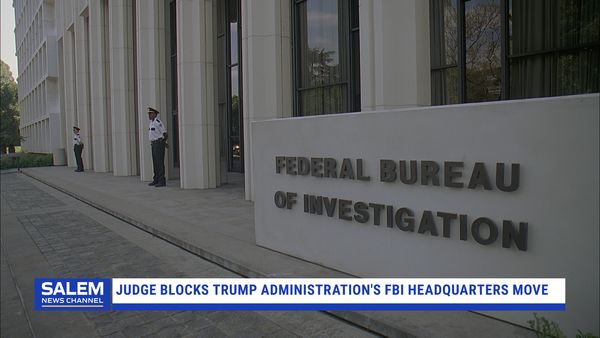
A federal judge has blocked the Trump administration’s plan to relocate FBI headquarters to the Ronald Reagan Building in Washington, ruling that the administration improperly abandoned an earlier plan to build a new facility in Greenbelt, Maryland.
U.S. District Judge Theodore Chuang, an appointee of former President Barack Obama, ruled Monday that the administration’s decision was “not in accordance with law.” The order prevents the administration from moving the FBI into the Reagan Building, renovating the building for the bureau or redirecting funds toward the project.
The Greenbelt location was selected during the Biden administration following years of debate over replacing the aging J. Edgar Hoover Building on Pennsylvania Avenue.
Trump administration officials later sought to reverse that decision and instead repurpose the Reagan Building, located just blocks from the FBI’s current headquarters.
The lawsuit challenging the change was brought by the state of Maryland and Prince George’s County, which argued that significant time and resources had already been committed to bringing the headquarters to Greenbelt.
The FBI criticized the ruling, accusing the court of improperly interfering with the administration’s effort to make the federal government more cost-effective. The bureau said it remains focused on determining the best course of action to meet the needs of federal law enforcement.
The ruling marks the latest turn in a yearslong battle over replacing the FBI’s current headquarters, which opened in 1975 and has fallen into significant disrepair.
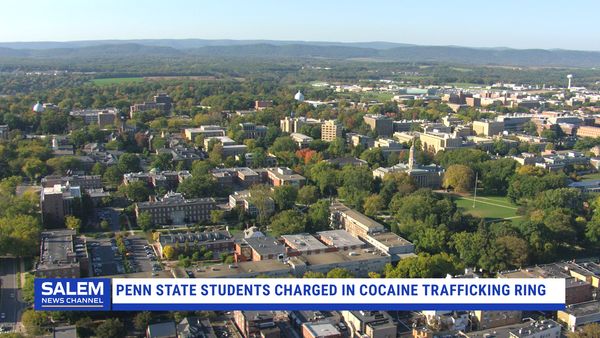
Thirteen current or former Penn State University students are among 14 people charged in connection with an alleged cocaine-trafficking operation involving two fraternities.
Pennsylvania Attorney General Dave Sunday said two of the defendants served as the main suppliers, routinely traveling to New York and Philadelphia to obtain large quantities of cocaine. Authorities say the drugs were then brought back to State College, packaged and distributed primarily to Penn State students.
Prosecutors say cocaine was packaged mainly at the off-campus Sigma Chi and Delta Upsilon fraternity houses. Investigators also allege some fraternity pledges were brought into the operation by being tasked with cutting and bagging cocaine.
Four defendants face felony charges including corrupt organizations and conspiracy, while others face charges ranging from felony conspiracy to misdemeanor drug possession. The 14th defendant, the father of a student, is accused of tampering with evidence and hindering the investigation.
Penn State has placed Delta Upsilon on interim suspension while the university investigates. Sigma Chi is not currently recognized by the university and operates outside Penn State oversight.
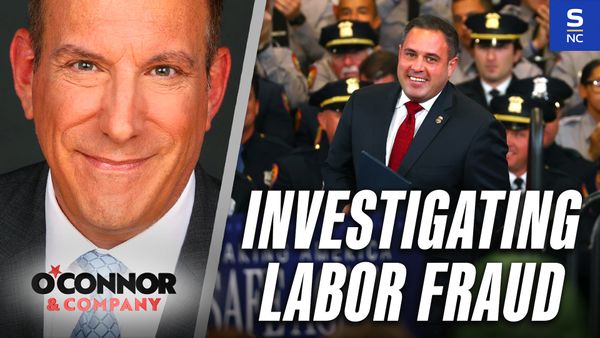
Anthony D'esposito, the Inspector General of the Department of Labor, discusses his proactive approach to uncovering and addressing labor fraud. D'esposito emphasizes the significance of bringing attention to the work of inspectors general and the importance of rooting out fraud that steals from the federal government. He highlights the Department of Labor's focus on unemployment insurance fraud and foreign labor fraud, particularly concerning the H1B visa program. D'esposito explains how fraudulent activities, such as overpayments and exploitation of the visa system, impact both federal funds and American workers, threatening the integrity of the job market. His investigative efforts extend to collaborating with other federal agencies to combat gun, human, and narcotics trafficking. D'esposito stresses the urgency of these issues and their potential impact on small businesses, especially in states like California, where unpaid debts to the federal government could lead to increased unemployment taxes for local businesses.
The FBI's latest crime statistics reveal a significant nationwide decline in violent crime rates. Murder and non-negligent manslaughter dropped by 18.1 percent, rape by 7.6 percent, and aggravated assault by 7 percent. These reductions are part of a broader trend that includes a 18.5 percent decrease in robberies. Jonathan Fahey, former federal prosecutor and acting ICE director under President Trump, attributes this decrease to several factors. The Trump administration focused on street crimes and violent offenses, contrasting with previous administrations that prioritized political crimes and protesters. Enhanced immigration enforcement, including the removal of serious criminals who entered the country illegally, also contributed to this decline. The deterrence effect of stricter immigration policies has led to fewer crimes, with the murder rate reaching its lowest point since 1956. The conversation also touches on the impact of focusing on drug trafficking, gang crimes, and immigration crimes, which have direct implications for local crime rates in cities like Dallas and Atlanta. The discussion further highlights the positive outcomes of combating drug cartels and making borders more secure, which has led to a substantial decrease in overdose deaths. Despite these achievements, there is concern that incoming policies may reverse these gains by dismantling ICE and defunding the police.
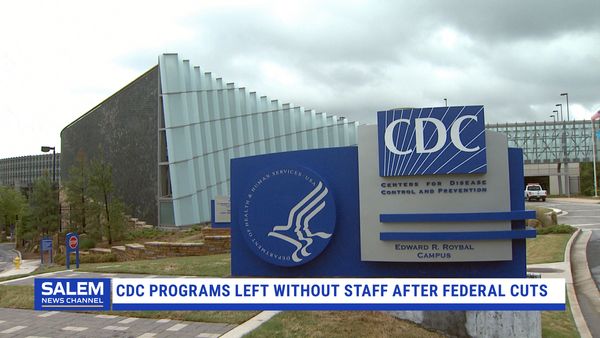
Several Centers for Disease Control and Prevention programs funded by Congress are operating with little or no staff following workforce cuts made as part of the Trump administration’s effort to restructure the federal government.
Among the affected programs is the CDC’s Alzheimer’s disease initiative, which received $41 million from Congress this year but currently has no staff assigned to it. The agency’s Office on Smoking and Health received $246 million, but its staff was also cut.
Programs focused on epilepsy, sickle cell disease data collection, overdose prevention and drowning prevention have also been affected.
The staffing shortages stem largely from layoffs that began in April 2025 as the administration moved to reduce and reorganize the federal health workforce. Some of those cuts were later reversed, while other employees remain on paid administrative leave as legal challenges continue.
Democratic lawmakers argue the administration is legally required to maintain enough staff to carry out programs specifically funded by Congress. During her confirmation hearing, new CDC Director Dr. Erica Schwartz told lawmakers she would follow the law when questioned about restoring work at the agency’s smoking prevention office.
Health Secretary Robert F. Kennedy Jr. has said the administration plans to hire additional federal health workers, particularly for programs addressing chronic disease. However, union officials say significant rehiring at the CDC has yet to occur.
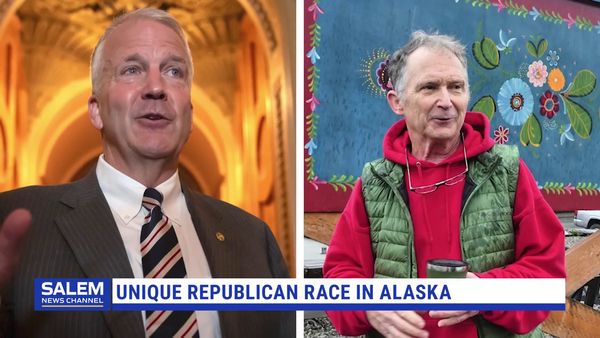
Voters are heading to the polls Tuesday for primary elections in Alaska, Florida and Wyoming, with one of the day’s more unusual contests unfolding in Alaska’s U.S. Senate race.
Republican Sen. Dan S. Sullivan, who is seeking a third term, is sharing the ballot with another Republican named Dan Sullivan — retired teacher Dan J. Sullivan. The same-name matchup has prompted concerns about voter confusion and drawn the attention of President Donald Trump.
Trump urged Alaskans on Truth Social to vote for the incumbent, calling him the “real Dan Sullivan” and accusing Democrats of putting an “imposter” with the same name on the ballot. Dan J. Sullivan has denied being recruited by Democrats and says he entered the race on his own.
The incumbent senator’s campaign previously challenged Dan J. Sullivan’s candidacy in court, arguing the shared name could confuse voters. That effort failed, although Alaska election officials have taken steps to distinguish the candidates on the ballot.
Former Democratic Rep. Mary Peltola is also running for the Senate seat and is viewed as a major challenger to the Republican incumbent heading into November. The race is receiving national attention as both parties battle for control of the Senate in this year’s midterm elections.
Take a graduate student of political philosophy. Now add a love of contemporary >>Take a graduate student of political philosophy. Now add a love of contemporary politics & popular culture. In this day, where America, conservatism, and politics are all being re-defined, Seth provides the guide and the tour - all while remaining . . . . <<
Logan Sekulow and Will Haynes are joined by Jordan Sekulow to discuss Justice >>Logan Sekulow and Will Haynes are joined by Jordan Sekulow to discuss Justice Ketanji Brown Jackson making the media rounds lately. <<
Larry Elder personifies the phrase “We’ve Got a Country to Save” The “Sage from >>Larry Elder personifies the phrase “We’ve Got a Country to Save” The “Sage from South Central” is back on the radio and TV! <<
Mark Levin's radio show is a mix of political and social commentary from a >>Mark Levin's radio show is a mix of political and social commentary from a conservative point of view, covers legal issues, including decisions of the Supreme Court of the United States. Levin follows the conventional talk radio model of taking . . . . . <<
Salem Media, our partners, and affiliates use cookies and similar technologies to enhance your browsing experience, analyze site traffic, personalize site content, and deliver relevant video recommendations. By using this website and continuing to navigate, you consent to our use of such technologies and the sharing of video viewing activity with third-party partners in accordance with the Video Privacy Protection Act and other privacy laws.Privacy Policy