State attorney general to discuss data centers at town hall
Regional News

Audio By Carbonatix
11:00 AM on Wednesday, October 14
(The Center Square) – A horde of Phoenix area residents will shoehorn their way into Mesa’s Eagles Community Center Wednesday evening to hear about the future of a hot-button topic, both in Arizona and around the country: data centers.
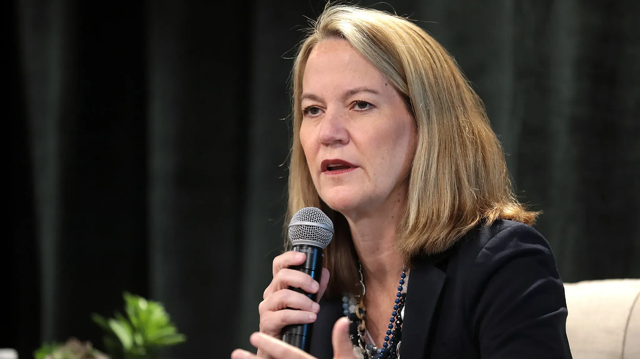
Democratic Attorney General Kris Mayes will discuss the Grand Canyon State's centers, which serve as the backbone of the artificial intelligence revolution, and whether their owners should be given carte blanche to expand across Arizona. Data centers are a key issue during Mayes' campaign for reelection against Senate President Warren Petersen, R-Gilbert.
Among those who plan on being in attendance on Wednesday night are longtime data center proponents, such as Project 48 Arizona Executive Director Josh Heywood. Project 48 Arizona is a nonpartisan organization that researches economic growth.
Heywood told The Center Square the perks that come from Arizona’s data center boom - such as the 20,000 jobs and more than $1 billion in state and local tax revenue they produced in 2024, according to a PricewaterhouseCoopers survey - outweigh the negatives.
Heywood also said he is interested in hearing what Mayes has to say about data centers and ensuring that Arizonans get all the facts before making up their minds on the topic. “We don't know exactly what will be said, but we want to make sure that people know all the facts on water, energy use, heat, noise and all the other concerns that we hear when it comes to data centers."
One person who will not be in attendance is Danny Seiden, CEO of the Arizona Chamber of Commerce and Industry.
Seiden challenged Mayes to put up or shut up, technology wise, during a call with The Center Square this week, saying the first-term Democrat should try a life without data center usage before bad-mouthing the industry.
“There are so many different things that are full of hypocrisy when we talk about this," Seiden told The Center Square. "First and foremost is, I think, her very first call for a data center moratorium was done on X or one of the [social media] platforms. That platform runs on the cloud, which is run by data centers. As do half of the mechanics of her office.”
Mayes has called for a statewide pause on the approval and construction of data centers, citing rising energy bills and the U.S. Department of the Interior’s decision to cut the state’s Colorado River water supplies by close to 30%.
Further, Mayes cited double-digit rate increase requests from several of the state’s largest energy suppliers, such as Arizona Public Service Co. and Tucson Electric Power Co., as a key reason for issuing a statewide data center moratorium.
What people like Seiden and Heywood want to know now is just how long Mayes wants the data center industry to go without building the centers and what the operators would have to do to gain the state’s approval.
“Unfortunately, we haven't seen any of those specifics yet,” Heywood told The Center Square. “And we think that if you're stopping an entire industry from putting money into Arizona, there should be a clear explanation of what we're hoping to accomplish and what would allow other projects to move forward.”
Democratic Gov. Katie Hobbs added three-year pause in new applications for data center tax breaks as part of the 2026-27 state budget, which the Legislature passed. That means those tax breaks won't take effect until June 30, 2029. The Governor's Office has estimated $63.5 million in revenues were lost from 2023 to 2025 because of the previous tax breaks for data centers.
Seiden said he sees the pause in tax breaks as a way for data center operators to earn back the trust of the communities where they are located, telling The Center Square that doing so will serve as a net positive for all involved.
“Everyone is changing the way they do business in a way that the community is more involved in, and that's a win-win,” Seiden said. “You get the investment, you get community benefits, and we get this essential digital infrastructure - infrastructure that’s not for AI to replace our jobs. It's for everything we do. It's our bank records, our medical records. Everything we use data centers for.”
Seiden also questioned Mayes getting involved with the question of data centers in her role as attorney general.
“I think a good question for the attorney general would be, 'What office are you running for?' ” Seiden said. “Because the attorney general has a job, and it isn't zoning administrator or utility regulator or any of the other things she's doing on this."
Both Seiden and Jon Riches, vice president for litigation at the Phoenix-based Goldwater Institute, stated their belief that Mayes lacks the grounds, legally, to call for a moratorium on data centers.
Furthermore, both cited the fact that most data center operators, in Phoenix and beyond, use closed-loop systems that recycle water to cool servers down. They expressed concerns about water and power usage being depicted as a boogeyman for the general public.
"The items that people object to the most are things that the data center industry has been working out," Riches told The Center Square. "And so these sorts of objections are being answered. And so, while they're being answered, to in the meantime call for a moratorium, we're not going to get to these solutions that are already happening by prohibiting reuse outright."
Opposition to data centers
Still, Americans at large have soured on data center development, according to a recent survey from Pew Research. It found 54% of respondents believe data centers are mostly bad for the environment, while 50% saw them as a net negative for home energy costs and 49% as a negative toward people’s quality of life near the centers.
“There are legitimate concerns about data centers, but let's also be realistic and welcome the investment,” Heywood said. “It's part of this entire tech ecosystem that we're hoping to build in Arizona. It's the same tech ecosystem that helped bring [Taiwan Semiconductor Manufacturing Co.] here with their $265 billion investment. And so, like we've always said, let's manage the concerns, but let's also be realistic and welcome the investment.”
Mark Stapp, a professor of real estate at the W.P. Carey School of Business at Arizona State University, argued that much of the data center discussion stems from fear of technology moving faster than regulations can keep up.
“Politicians are responsive to their electorate, so they’re responding to the community’s response,” Stapp told The Center Square. “Communities are responding based upon perception and what they see, and it’s concerning to them.
“AI is this amorphous thing, but data centers represent the physical aspect of that amorphous thing, and we don’t what they are, because nobody really knows the full effect of AI yet," Stapp said.
Still, Stapp said he understands where Mayes and other politicians are coming from, given the ever-evolving nature of technology and the growing calls for something to be done about it by the general electorate.
“I don’t know that [Kris Mayes] is wrong. I think that she’s acting out of an abundance of caution,” Stapp said. “And what I think really needs to be done is that there needs to be a better understanding of the demand for these data centers, which will allow them to make better decisions about these things. And right now, there’s not a lot of good information out there.”