Brophy McGee points to opportunities, falling property taxes
Regional News


Audio By Carbonatix
11:32 AM on Thursday, October 22
(The Center Square) – The crackle of thunder and the arrival of stormy weather did little to dispirit those in attendance Thursday morning at the State of the County in Phoenix, where they heard about a six-year decrease in property taxes.
While the weather outside the cavernous ballroom at the Tapatio Cliffs Resort was ominous, the message from Maricopa County Board of Supervisors Chair Kate Brophy McGee and her acolytes was designed to be anything but doom and gloom.
And the second-year board member and former longtime state lawmaker told audience members that the coming midterm election and new year presented ample opportunities for Arizona’s most populous county.
Chief among those opportunities, McGee said, is the county’s Proposition 413, which is a continuation on the one-fifth of one cent sales tax that’s been in place since 2007.
The proposition aims to provide another $313 million between now and June 2028, with the proceeds benefiting the county’s jail system.
Brophy McGee said 99% of the tax dollars, which service the county’s Detention Fund, were tied to required services and programs, either by state or federal mandates.
“We must ensure we have enough law enforcement personnel to do the job, and that they're paid fairly so we can recruit and retain them,” Brophy McGee told the crowd Thursday morning. “Likewise, it's critical that our jail system has the funding for jail operations, including treatment and rehabilitation.”
Should Prop. 413 fail, Brophy McGee warned the crowd at the Greater Phoenix Chamber-sponsored event that the county’s jail funding stream would expire by March 2027. She said that's because Maricopa County doesn’t have enough existing property taxes to cover the expenses.
“Without Prop 413 funding, we would be forced to raise property taxes, and obviously and clearly, our public safety would suffer,” she said.
But Brophy McGee expressed confidence that the county’s 2.5 million eligible voters would pass the jail funding proposition for a third time.
Taxpayer-focused government
Both Brophy McGee and County Manager Jen Pokorski hammered home the county’s fiscally conservative approach to government, with both discussing how much they’re able to get done with a slimmed down staff.
Brophy McGee cited the fact that residents have seen their property tax bills drop six years in a row, along with the fact that the governmental budget is $278 million below the its maximum allowable tax levy with no debt on their ledger, as examples of that conservatism in action.
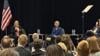
Maricopa County officials discuss the State of the County in Phoenix, Oct. 22, 2026.
Maricopa County Manager Jen Pokorski, left, Board of Supervisors Chair Kate Brophy McGee, center, and Greater Phoenix Chamber President and CEO Todd Saunders, right, discuss the State of Maricopa County in Phoenix, Oct. 22, 2026. Photo: Christopher Boan / The Center Square
In her closing remarks, Brophy McGee hammered home that message, stressing to the crowd full of local businesspeople and politicians how important it is to not lose sight of taxpayers and their money.
“I am gratified to see that the board's total focus is our taxpayers, our voters, our constituents and providing the types of county services that you all need,” McGee said.
Eviction prevention
The State of the County also addressed the county’s eviction prevention program, which gives out rent funding to U.S. citizens in four ZIP codes in the area.
So far, the program’s doled out just over $340,700 in rent payments since launching earlier this year.
Brophy McGee said the program is one way to try to put a dent in the quarter-of-a-million eviction filings in Maricopa County over the past three years, with more than 900 people submitting applications within four days of its opening window.
The demand for rental help speaks to the need in the community, she said. She added the program benefits both tenants and property owners. She described it as it as is way out of costly eviction proceedings that cost local property owners $8,500 in lost rent, legal expenses and turnover costs on average.
“If we can help people facing temporary financial hardship stay off the streets, provide them with case management, then we know that costs for all parties are reduced, or even avoided, and there will be more long-term success,” she said.
“That’s the sweet spot," McGee said. "We save taxpayer dollars and improve the quality of life for Maricopa County residents."